Physicians for Human Rights
Using science and medicine to stop human rights violationsAttacks on Doctors in Bahrain
Under the Gun: Ongoing Assaults on Bahrain’s Health System
In February 2011, the Government of Bahrain began targeting health professionals who treated protesters. In April 2012, PHR's Richard Sollom, Deputy Director, and Holly Atkinson, MD, FACP, past President of PHR's Board and volunteer expert, authored a report showing the devastation on Bahrain's health system that have resulted from the Government of Bahrain’s continued assault on doctors, patients, and the healthcare system.
> Read the Report (pdf)
> TAKE ACTION: Tell Bahrain to Dismiss Charges Against Medical Professionals
Thousands of protesters in the small island Kingdom of Bahrain in the Persian Gulf took to the streets calling for government reform in February and March 2011. The Bahraini government’s response was brutal and systematic: shoot civilian protesters, detain and torture them, and erase all evidence.
On the frontline, treating hundreds of these wounded civilians, doctors had first-hand knowledge of government atrocities. As a result of their efforts to provide unbiased care for wounded protestors, the government initiated systematic and targeted attacks against medical personnel. This assault on healthcare workers and their patients constitutes extreme violations of the principle of medical neutrality and are grave breaches of international law.
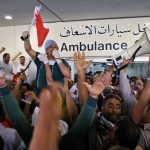
PHR went to Bahrain to investigate and document these attacks. Our investigators spoke with eyewitnesses of abducted physicians, some of whom were ripped from their homes in the middle of the night by masked security forces. Our report, Do No Harm, documents other violations of medical neutrality including the beating, abuse, and threatening of Shi’a physicians at Salmaniya Hospital; government security forces stealing ambulances and posing as medics; the militarization of hospitals and clinics, thus obstructing medical care; and rampant fear that prevents patients from seeking urgent medical treatment. Other key findings in the report include the use excessive force against unarmed civilians and violent assaults on civilian detainees by government authorities and security forces.
Medicine and delivery of health care should unite rather than divide a country. There are immeasurable long-term consequences of these atrocities. For each doctor, nurse, or medic that the government disappears, many more civilians’ lives are impacted as patients go untreated. Bahrain’s abuses in the spring of 2011 are the most extreme violations of medical neutrality in the past half century, and history will remember them as such.
Read Do No Harm: A Call for Bahrain to End Systematic Attacks on Doctors and Patients
Learn More
- The Principle of Medical Neutrality
- Medics on Trial in Bahrain
- Read PHR's Summer/Fall Newsletter, featuring the Bahrain investigation.
PHR-Led Bill to Protect Health Workers Introduced (May 16, 2013)
PHR today helped introduce a bill that would protect health workers globally from increasing attacks during times of war and unrest, and ensure they can continue to provide services without fear of violence, retribution, or arrest.
Bahrain Appeals Court Decision Corrects Some Injustices, But Others Remain (March 28, 2013)
PHR welcomes a Bahrain appeals court’s decision today to reverse the convictions of 21 health professionals arrested in connection with Arab spring pro-democracy protests in 2011.
No country has abused chemical gases like Bahrain (Ahlul Bayt News Agency, February 23, 2013)
Experts say that Bahrain is using a poisonous form of tear gas against civilians that Bahrain wouldn’t even be permitted to use in a war against armed soldiers! Physicians for Human Rights (PHR) report that in 100 years of tear gas being used against civilians, no country has ever abused it like Bahrain. Police “routinely violated every UN principle governing police use of force.”
UK: Bahrain our ally; despite crackdown (PressTV.com, February 22, 2013)
Britain has voiced support for the Bahraini regime as London’s ally despite Manama’s continued brutal crackdown on peaceful protests. ... This comes as Physicians for Human Rights has also slammed the Bahraini regime saying doctors and nurses have been detained, tortured, or disappeared because they had "evidence of atrocities committed by the authorities, security forces, and riot police" in the crackdown on anti-government protests.
Ongoing Politicization of Medical Affairs in Bahrain Requires Vigorous Response (May 3, 2013)
The cancellation of an international medical ethics conference that had been scheduled for April 10-12 in Bahrain is another sign that the country’s rulers continue a systematic pattern of politicizing medical affairs.
Stained Glass Transparency: Bahrain’s Latest Obfuscation of International Human Rights Accountability (April 25, 2013)
Bahrain has again indefinitely postponed a visit by the UN’s special rapporteur on torture, the latest in a series of attempts to deter human rights observers from scrutinizing the kingdom’s dismal human records record. The government told the rapporteur, Juan Méndez, that his visit could be “immensely damaging” to the Bahrain National Dialogue, an initiative that should welcome such a visit if it truly seeks to promote reform.
Capitol Hill Briefing Spotlights Bahrain’s Lack of Progress in Bolstering Human Rights (November 15, 2012)
Nearly one year after the Bahrain Independent Commission of Inquiry released a report recommending legal and policy changes to improve human rights in that country, the kingdom’s regime has failed to live up to its pledge to implement those changes, according to panelists at a Congressional briefing Wednesday.
Four Imprisoned Bahraini Medical Professionals Should be Released Immediately (April 25, 2012)
Today at his appellate court trial in Bahrain, hospital administrator Younis Ashoori could have been freed from arbitrary detention. The trumped up charges against him could have been overturned, proving to Bahrain’s citizens and the world that the Bahraini government would not dare to uphold a three-year conviction handed down last June by military court. Sadly, this was not the case.
US Senators and Representatives Call on Bahrain to Pardon Imprisoned Medics (October 2012)
Two Senators and 22 Representatives jointly signed a letter to the King of Bahrain today, calling on him to pardon eight medical professionals convicted for providing medical care to injured protesters.
Rights Organizations Call on US Secretary of State to Suspend Military Assistance to Bahrain (September 2012)
PHR joined ten other organizations in calling on Secretary of State Hillary Clinton to immediately suspend US military assistance and arms transfers to security force units in Bahrain that are engaging in human rights violations.
Weaponizing Tear Gas (August 2012)
The Bahrain government’s indiscriminate use of tear gas as a weapon has resulted in the maiming, blinding, and even killing of civilian protesters, and must stop at once while the government reassesses the use of such toxic chemical agents. PHR's new report details the findings of our investigation.
Richard Sollom Testifies Before Lantos Human Rights Commission on Bahrain's Use of Tear Gas (August 2012)
At the Tom Lantos Human Rights Commission Hearing on the “Implementation of the Bahrain Independent Commission of Inquiry Report”, Richard Sollom testified about PHR's investigation of Bahrain's use of toxic chemical agents ("tear gas") against civilians.
Featured Report
Do No Harm
PHR's emergency report documents and decries systematic human rights abuses in Bahrain, and persecution of health workers based on their knowledge of those abuses. Read More »
Featured Expert

Nizam Peerwani, MD
A Chief Medical Examiner in Texas since 1979, Dr. Peerwani was one of two investigators for PHR of attacks on health professionals and their patients in Bahrain in 2011. Read More »

