
Skip to Main Content
Printer Friendly Home > About > Places > Afghanistan

Afghanistan

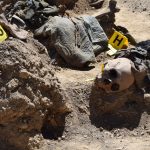
PHR has been investigating human rights violations in Afghanistan since 1998, when it first focused on the abuses of women under the rule of the Taliban. Today, PHR continues to call for a full investigation into an alleged massacre of as many as 2,000 Taliban prisoners who surrendered in November 2001 to US and Afghan forces and are believed to have been buried in the desert of Dasht-e-Leili.

PHR has also investigated the abuses of detainees captured in Afghanistan during the war on terror and continues to call for accountability of those who authorized and carried out the abuse.

Our expertise in forensics is helping the government of Afghanistan and civil society work together to investigate mass atrocities in order to heal the nation and create a more stable society.

Afghanistan Must Bolster Its Capacity to Identify the Missing, PHR Declares in New Report (April 24, 2013)

A new report by Physicians for Human Rights (PHR) released at a conference in Kabul today on “Truth Seeking and the Role of Forensic Science” outlines steps that Afghanistan can take if it is to make progress in addressing the right to truth of victims of more than three decades of violent conflict by identifying missing and disappeared persons.

The Outer Limits - Waking the dead (The Times, Higher Education, November 29, 2012)

In the first of a new series on academics who conduct research in extreme circumstances, Gillian Fowler recalls the six years she spent working as a forensic anthropologist exhuming mass graves in Guatemala. Fowler also mentions her consulting work for PHR in Kabul, Afghanistan, training a team of Afghans to carry out mass grave investigations.

How the US Rendered, Tortured and Discarded One Innocent Man (The Nation, June 29, 2012)

In fall 2009, I found myself in a Tanzanian hotel lobby, sitting across from Suleiman Abdallah, a lanky man with a goofy smile and a broken tooth. Over the next few days, he would describe in excruciating detail how he had been captured in Mogadish in 2003 by a Somali warlord and handed over to American officials, who had him rendered via Kenya and Djibouti to Afghanistan for five years of detention and torture.

Afghan negotiator seeks to build bridge between US, Taliban (Stars and Stripes, May 3, 2012)

PHR report on Taliban atrocities is remembered as Afghan official attempts to make peace between US and Afghanistan.

More -General News »

Science and Justice in Afghanistan (April 27, 2012)

With the backing of PHR, the Afghanistan Forensic Science Organization (AFSO) was officially launched in Kabul on March 7, 2012. The AFSO was created by eighteen participants of PHR’s 2010 forensic training program in Afghanistan, and funded through PHR’s International Forensic Program.

On 10 Year Anniversary of ‘Convoy of Death’, President Obama Must Keep His Promise to Investigate (December 20, 2011)

This December marks the 10-year anniversary of the “Convoy of Death.” During Operation Enduring Freedom in Afghanistan, 2,000 prisoners who had surrendered to the US and the Afghan Northern Alliance were shot or suffocated to death in sealed truck containers while being transferred by Northern Alliance forces. The dead prisoners – some of who had been tortured - were then buried in a mass grave in a northern Afghanistan desert at Dasht-e-Leili.

Obama’s Attempt to Prevent Mass Atrocities is Positive First Step (August 16, 2011)

Recently the Obama Administration unveiled landmark legislation which has the potential to strengthen how the US deals with the prevention of mass atrocities and serious human rights violations. The inter-agency Atrocities Prevention Board (PSD-10) aims to close existing gaps in US law and provide new economic, diplomatic, and political deterrents to ensure that the US responds swiftly and unequivocally to all manner of human rights violators.

Afghan Panel on Human Rights and Transitional Justice (August 12, 2011)

International Forensic Program (IFP) Director Stefan Schmitt and Program Consultant Zabi Mazoori participated on July 21, 2011, in the 79th “Guftegu”, a public discussion with expert panelists, on “Truth Seeking and Justice in Afghanistan” at the French Cultural Center in Kabul.

More -General Posts »

Securing Afghanistan's Past: Human Remains Identification Needs and Gap Analysis (April 2013)

PHR's report outlines steps that Afghanistan can take if it is to make progress in addressing the right to truth of victims of more than three decades of violent conflict by identifying missing and disappeared persons.

Physicians for Human Rights Letter to President Barack Obama (July 2009)

PHR calls on President Obama launch a probe into the alleged Dasht-e-Leili massacre and its cover-up by the Bush Administration.

Broken Laws, Broken Lives (June 2008)

PHR's report details for the first time medical evidence confirming first-hand accounts of men who endured torture by US personnel in Iraq, Afghanistan, and Guantánamo Bay. These men were never charged with any crime.

Afghanistan Support Project July 2007 (October 2007)

In July 2007, PHR sent a two-person team to Afghanistan to assess continuing need for forensic assistance in establishing accountability for serious war crimes and crimes against humanity, with a view to ending impunity and to establish the truth of what happened in the past. An expected outcome is to undertake forensic investigations relating to mass graves.

More -General Research »